

Most of the trees across the farm have lost their leaves. The maples lost their color weeks ago, and the sycamore’s pale bark stands out along the creek. Only the oaks and the beech trees are still holding their brown leaves, rattling in the wind as if they are not quite finished with something.
Both of these trees are known for this. They hold their leaves longer than most trees, sometimes well into winter, letting them fall slowly through the cold months as wind and rain loosen the stems. Their timing is steady and unhurried.
Watching them, I keep thinking about how different the rhythms of letting go can be. Some things fall away all at once. Others take their time, loosening little by little until the last leaf finally drops. There is no single way to surrender. Nature shows us many.
The Land Knows
So, with the leaves mostly gone, everything feels more open. The line-of-sight stretches farther into the woods, and a quiet calmness settles in even deeper.
Along Frenchs Creek, the beaver dam is holding a wide, still pool. Wood ducks have found it and begun using it as a winter haven, slipping in and out through the trees with confidence. The beavers have shifted into their slower season, tending small repairs on the dam and saving their strength for the deeper cold that January and February often bring. Their rhythm feels steady and sure, shaped by a knowledge as old as time.
Out in the fields, the canola stays green against the muted browns of winter. Wide stretches of color rise from the cold ground, vibrant and alive while much of the land seems to sleep. It stands as a quiet reminder that life does not disappear in the cold. It simply changes its pace.
The winter birds are easier to notice now that the branches are bare. Kestrels perch on the power lines at the field edges, watching for movement in the grass below. Coopers hawks slip through the trees with quick, acrobatic turns. And northern harriers skim low across the open ground, gliding in slow arcs that belong to this season. They remind me that what sometimes appears empty is often full of life that we have not learned how to see.
My Own Winter
In many ways, I have been living through my own winter these last few years. I shut down my poultry farm after thirty years inside a system that no longer aligned with my values. It was not only the scale of industrial production. It was also the treatment of the animals, the pressure placed on employees, and the weight carried by the farmers who tried to keep the system going. I could no longer participate in something that asked so much and returned so little to the lives it depended on.
I also closed my remodeling business. The work itself was fine, but it belonged to a culture of constant consumption, where perfectly good rooms were torn out simply because the neighbors had updated theirs. It was another place where my values no longer matched the world I was helping to build.
Both choices carried their own kind of truth and healing. Both showed me how far I had drifted from what I believed, and stepping away has given me room to breathe again, to slow down, and to see the branches of my life with a clearer and kinder eye.
And like the oaks and the beeches, I find there are things in me that still cling to the branches. The generational wounds that take time to heal. The grief that takes years to name and even longer to hold. And as the cold settles in, those places are beginning to loosen, the way the last leaves let go when the season is ready.
I am beginning to trust that what needs to fall will do so in its own time. I no longer try to pry anything loose. I am learning to trust the slow work of the roots and to keep breathing through the seasons of my own life.
Living from Love
Winter is not only for rest. It also holds a quieter kind of tending.
During the days around Thanksgiving, I have found myself moving through the fields with a sense of gratitude for the life that surrounds me. The wildlife. The small movements in the timber. The creek and its animals who shape it through each season.
I have been checking the mineral blocks I set out for the deer earlier this fall. The ground around them is marked with fresh tracks, and the stump beside the block is scraped and worn. It make me smile to see that the deer have been biting off pieces of the mineral supplement, taking in what they need as the season turns colder.
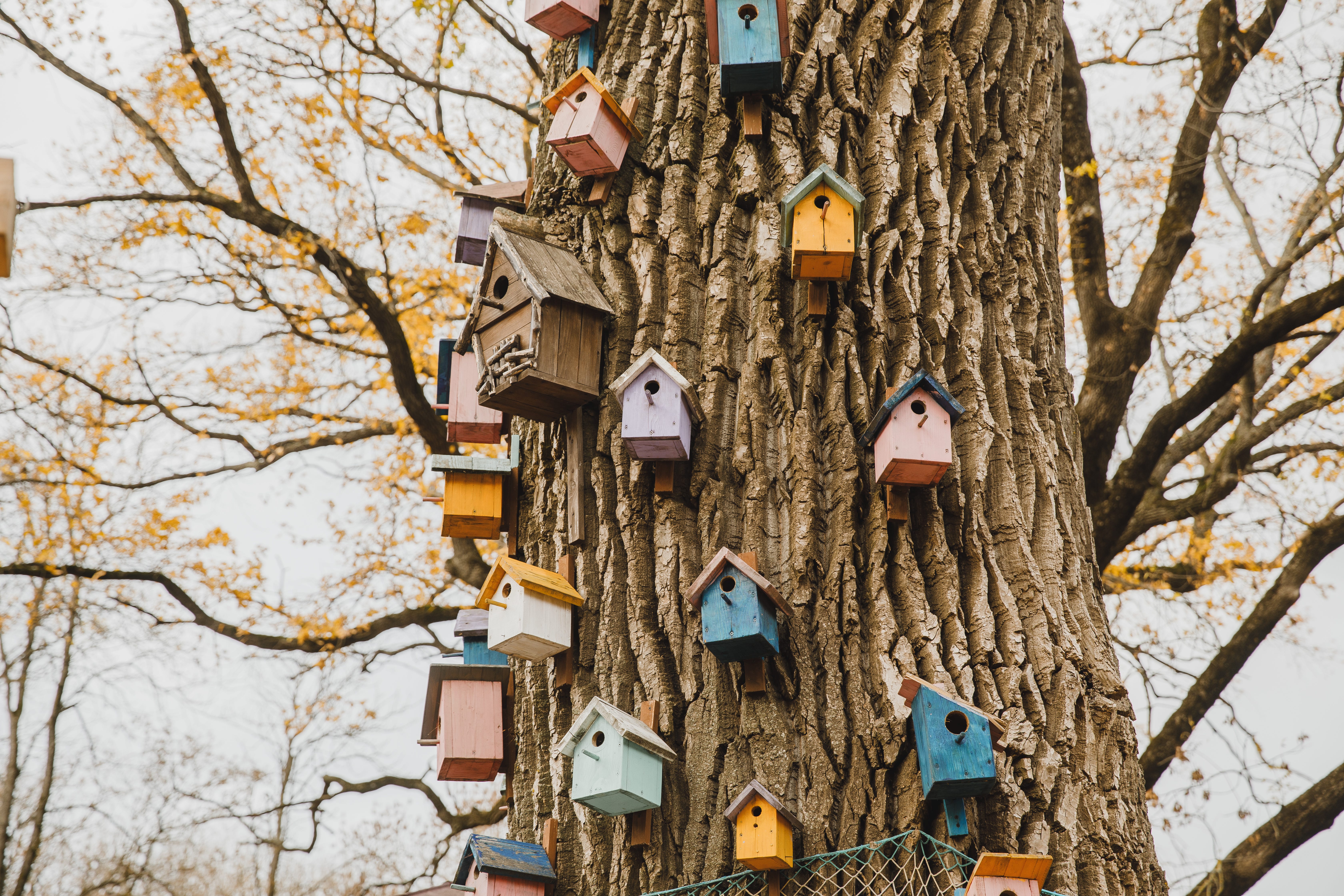
We also keep several bluebird boxes scattered across the farm. This time of year I check each one, tightening hardware and replacing what has begun to rot. Getting them ready for spring.
Seeing wood ducks using the quiet water along the creek has encouraged me to build nesting boxes for them as well. So I have been cutting and assembling the pieces in the shop on cold afternoons, preparing a few to place along the creek and a few near the backed up water.
Over the next couple months I hope to add a box for barn owls and a few for the kestrels.
It is simple work. No contracts and no production schedules. Just preparing places of welcome for whatever needs a home.
The Hidden Work
And as I am doing this work and going through all this transformation I’m seeing how Winter asks us to trust what is happening underground and unseen. Reminding us that roots grow in darkness. Seeds split open long before we ever see a blade of green. The land shows us that slow work is still holy work.
This season asks us to stop producing, to rest where we can, and to let our hearts speak their quiet truth. The beavers know this. The groundhogs know it too. They rely on rhythms older than fear.
I am learning to do the same. The heavy lifting of dismantling my old life is mostly done. Now I am settling in, tending what remains, building habitat instead of industry, and watching for the gifts that only come when everything grows still.
If you find yourself in your own winter, you are not behind and you are not broken.
Maybe you are in a season that invites a different kind of attention.
What are you still holding that doesn’t serve you any longer?
What might only arrive now, in the cold and the quiet?
More to Explore
If you feel drawn to the birds and to the quiet work of tending habitat, I added a time lapse at the end of this piece that shows the building of a wood duck nesting box from start to finish. You can watch the boards being laid out and cut to size, the complete construction, and the month and year carved and burned into the side so the box can be identified for in the seasons ahead.
These boxes will go along Piney Creek and the small pond shaped by the beavers. Wood ducks are cautious and beautiful birds, and creating safe places for them to nest is one way to support the life that moves across this land.
If you want more detail about bluebirds or barn owls or any of the winter visitors in this story, there is a spoken version of the article at the top of the page. You can also listen to the longer conversation on the podcast or visit YouTube to see more of the wildlife work happening here.
And if you want to follow the wider journey of breathwork, healing, and land stewardship, you are welcome to sign up for the monthly Breathwork session at the link below.
Wood Duck Box Build Time Lapse
If you want to explore creating habitat where you live, these links are a good place to begin.
You will find plans for wood duck and bluebird boxes, along with a Cornell guide that shows many of the birds in your region and the homes they need.
A Great Resource from Cornell University for Nest Box and Nest Structure Plans by Species
Keith Rowe is a breathworker, teacher, and founder of Vital Healing, a nonprofit that helps people reconnect with the wisdom of their heart through through breathwork, inner exploration, and walking meditation.
He is co-creator of the upcoming Walking Pilgrim app, a 33-day journey of mindful walking and presence. Sign up to receive updates for when it is released at walkingpilgrim.com.