

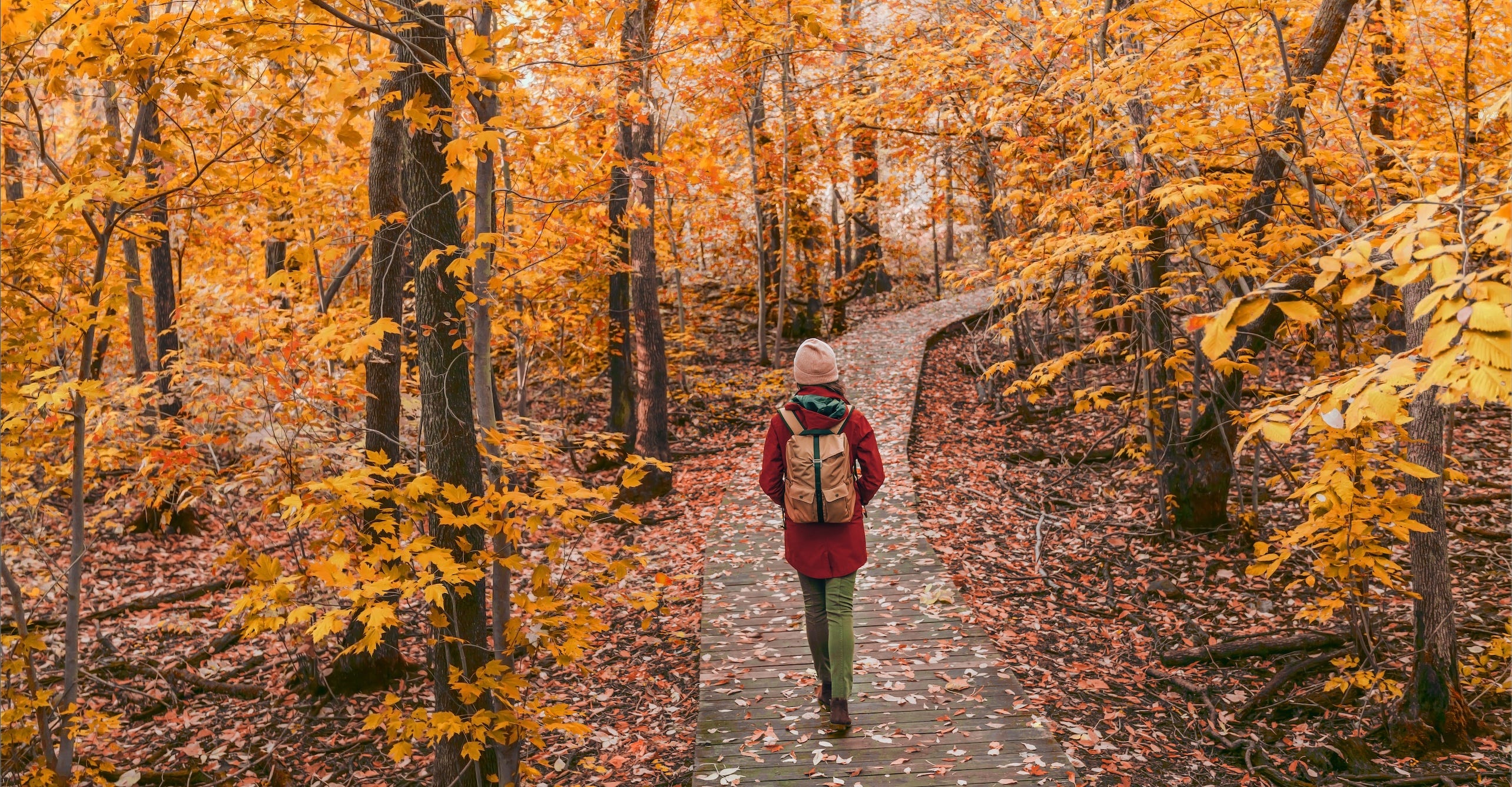
Our bodies hold sacred wisdom. They remember what our minds forget, that we are souls learning what it means to be human through breath and feeling. The body is where the soul understands that it belongs here, yet in the rush of modern life, we often forget to listen.
Meeting Restless Energy
Many of us live with a low hum of restlessness moving through our bodies. We sit at desks all day. We move quickly from task to task living more in our heads than in our hearts.
When we try to suddenly sit perfectly still for meditation, we fight against years of conditioning. We ask our nervous systems to do something that feels foreign, and even unsafe.
Walking meditation meets us where we are, with whatever energy is moving through us. It turns that movement into a pathway back to ourselves.
Why Walking Works
There is wisdom in understanding that we often need to move before we can be still.
When the body carries energy, walking gives it direction. Each step releases a little tension. Each breath joined with movement helps the nervous system settle and the mind quiet.
Unlike the chaotic stimulation of daily life, walking offers a steady, predictable rhythm. Our bodies begin to remember what it feels like to move with presence instead of urgency, to be in motion without being rushed. Over time, the rhythm of walking becomes medicine.
When we walk with intention, we create space to hear what our bodies are telling us. The restlessness that feels distracting in sitting meditation becomes useful information in walking meditation. The fidgeting becomes purposeful steps. The racing thoughts find somewhere to go.
A Walking Practice to Try
Choose a time when you can walk for twenty or thirty minutes, or even just five if that is what you have today. The length matters less than the quality of your attention. Walk somewhere you feel safe, whether on a neighborhood street, through a park, or inside your home. Stay aware of your surroundings and keep your senses open.
1. Arrive in your body
Before you begin, stand still for a moment. Feel your feet on the ground. Notice how the weight shifts between them. Sense the strength of your legs, the length of your spine, the rise and fall of your breath. Take a slow inhale through your nose, feeling your ribs widen. Exhale fully and let your shoulders drop. Do this two or three times until you feel yourself here.
2. Begin to walk
Start at a steady, comfortable pace. Let your breath and steps find one another. You might inhale for three or four steps and exhale for three or four steps. Adjust until it feels natural. The rhythm is not a rule; it is a way of listening to how your body and breath move together.
3. Open your awareness
Notice the air on your skin. Listen to the sounds near and far. Simply let your eye notice the way light touches what you see. If you are in nature, feel the more than human world moving with you. If you are in the city, sense the pulse of human life beneath the noise. Let it all belong.
4. Return to presence
When your mind drifts, return to your feet. Feel each step, your heel, the roll, and lift. Feel your breath joining it. Each return strengthens the thread of awareness that connects body, breath, and attention.
5. Pause and reflect
When you finish, stop for a moment. Stand still and breathe. Notice how you feel compared to when you began. Is your breath slower? Has your body softened? What has shifted inside you?
Even a short walk done in this way can reset our nervous system and clear our mind. A longer walk allows the rhythm to deepen, carrying you from restlessness into quiet presence.
The Invitation Forward
We have seen why it is hard to sit still when our nervous systems are overstimulated. We are honoring the body’s need to move and discharge energy. This creates a way to work with that restlessness instead of against it.
Walking meditation is just the beginning. When we learn to move with presence, we discover that coming home to ourselves is not something we do only in meditation. It becomes a way of being that we can access anytime, when we return to our breath and the simple rhythm of our steps.
We can walk to the mailbox with presence, and we can walk through the grocery store with awareness.
We can turn any movement into a return to the sacred space within our own bodies.
The path is waiting. We just need to take the first step.
Keith Rowe is a breathworker, teacher, and founder of Vital Healing, a nonprofit that helps people reconnect with the wisdom of their heart through through breathwork, inner exploration, and walking meditation.
He is co-creator of the upcoming Walking Pilgrim app, a 33-day journey of mindful walking and presence. Sign up to receive updates for when it is released at walkingpilgrim.com.