

We live with a level of convenience that would have stunned every generation before us. Fresh food delivered in minutes. Water, heat, and light on demand. Constant connection through screens that never sleep. These comforts give us more personal freedom than our ancestors ever knew, yet many of us still feel restless and strangely empty.
Part of the reason is that convenience can expand freedom, but it cannot replace what community once provided. When life becomes easy to manage alone, we can drift away from the relationships and shared rhythms that once made us feel rooted. The emptiness we feel today is not new. It comes from a hunger that has lived in people for a long time.
What Franklin Saw
In 1753, Benjamin Franklin wrote a letter that captured something puzzling. He was writing about white captives who had been taken by Native Americans and later ransomed back to colonial society:
“When white persons of either sex have been taken prisoners young by the Indians, and lived a while among them… though ransomed by their friends … yet in a short time they become disgusted with our manner of life … and take the first good opportunity of escaping again into the woods.”
Franklin wasn’t romanticizing. He was observing a pattern that troubled colonial observers: people were choosing to return to Native communities even after being “rescued.”
The Woman Who Chose to Stay
One of the clearest stories comes from Mary Jemison. She was taken captive as a teenager during the French and Indian War and adopted by the Seneca. The journey to their territory was brutal. She was traveling on foot for hundreds of miles, carrying a child on her back, sleeping on wet ground. But when she arrived at Genishau on the Genesee River, something unexpected happened.
She writes: “We were kindly received by my Indian mother and the other members of the family, who appeared to make me welcome; and my two sisters, whom I had not seen in two years, received me with every expression of love and friendship. The warmth of their feelings, the kind reception which I met with, and the continued favors that I received at their hands, rivetted my affection for them so strongly that I am constrained to believe that I loved them as I should have loved my own sister had she lived, and I had been brought up with her.”
She lived with the Seneca through peacetime years between the wars. About those years, she said: “No people can live more happy than the Indians did in times of peace. Their lives were a continual round of pleasures. Their wants were few, and easily satisfied; and their cares were only for to-day. If peace ever dwelt with men, it was in former times, in the recesses from war, amongst what are now termed barbarians.”
Years later, after the Revolutionary War, her adoptive brother offered her complete freedom to return to white society. Her son Thomas wanted to go with her. She refused.
Her reasoning was striking. She had a large family of Indian children, and feared her white relatives would “despise them, if not myself; and treat us as enemies; or, at least with a degree of cold indifference, which I thought I could not endure.” But there was more to it than fear. She had found something she didn’t want to leave.
She married within the Seneca, raised her children there, and lived the rest of her life in that community. When her narrative was recorded in her eighties, the interviewer noted that “her neighbors speak of her as possessing one of the happiest tempers and disposition.” She lived surrounded by children, grandchildren, and great-grandchildren on land along the Genesee River. The life she chose gave her what she needed not just to survive, but to flourish.
A Pattern Was Everywhere
What Franklin observed and Jemison lived, J. Hector St. John de Crèvecœur (Cray-vuh-cur) documented in detail. A French-born observer who spent years on the frontier, he wrote in 1782 of an Englishman and a Swede who had been captured, adopted into Native families, and later offered substantial ransom money to return home. They refused.
Their reasons, he said, would “greatly surprise you: the most perfect freedom, the ease of living, the absence of those cares and corroding solicitudes which so often prevail with us.”
What struck Crèvecœur most was the directional imbalance: “thousands of Europeans are Indians, and we have no examples of even one of those Aborigines having from choice become Europeans!” For him, this revealed something essential, that Native communities were offering “something more congenial to our native dispositions, than the fictitious society in which we live.”
He had witnessed parents searching for children after wars, only to find them “so perfectly Indianised, that many knew them no longer, and those whose more advanced ages permitted them to recollect their fathers and mothers, absolutely refused to follow them, and ran to their adopted parents for protection.”
For these observers Franklin noting the pattern, Jemison living it, and Crèvecœur documenting it, the evidence was unmistakable. People were not simply turning away from their old world. They were stepping into a form of life that held freedom and belonging side by side, a way of being that felt closer to what a human life is meant to carry.
The Pull That Has Never Left
The pull we are talking about has never disappeared. It rises beneath our restlessness and beneath our longing for something deeper than comfort. It surfaces whenever convenience fails to answer the questions that matter and whenever a fast-paced life leaves the heart hungry.
At the center of all this is a longing for a more human way of living. Convenience can meet our needs, but something deeper still goes unnourished. Most of us want connection that feels natural and unforced, and we want freedom that does not cut us off from community. The two belong together. When they drift apart, we begin to lose our sense of meaning and place in the world. Life becomes efficient, yet it no longer feels like it is feeding the part of us that wants to belong and contribute and be known.
Answering this call is not about going back in time. It is about coming back to ourselves. We are shaped for relationship, for reciprocity, for a rhythm of life that honors both individuality and belonging. What we’re searching for draws our attention to quieter truths: that we want lives that feel real, and that connection is part of our nature.
It begins with attention. With choosing presence over speed, and letting the living world steady us again instead of rushing past it. As we come to know ourselves more clearly through this attention, we begin to understand where our restlessness comes from and what we’re actually hungry for. That clarity makes it possible to reach toward others who share the same longing, to build the connections that convenience promised but could never deliver.
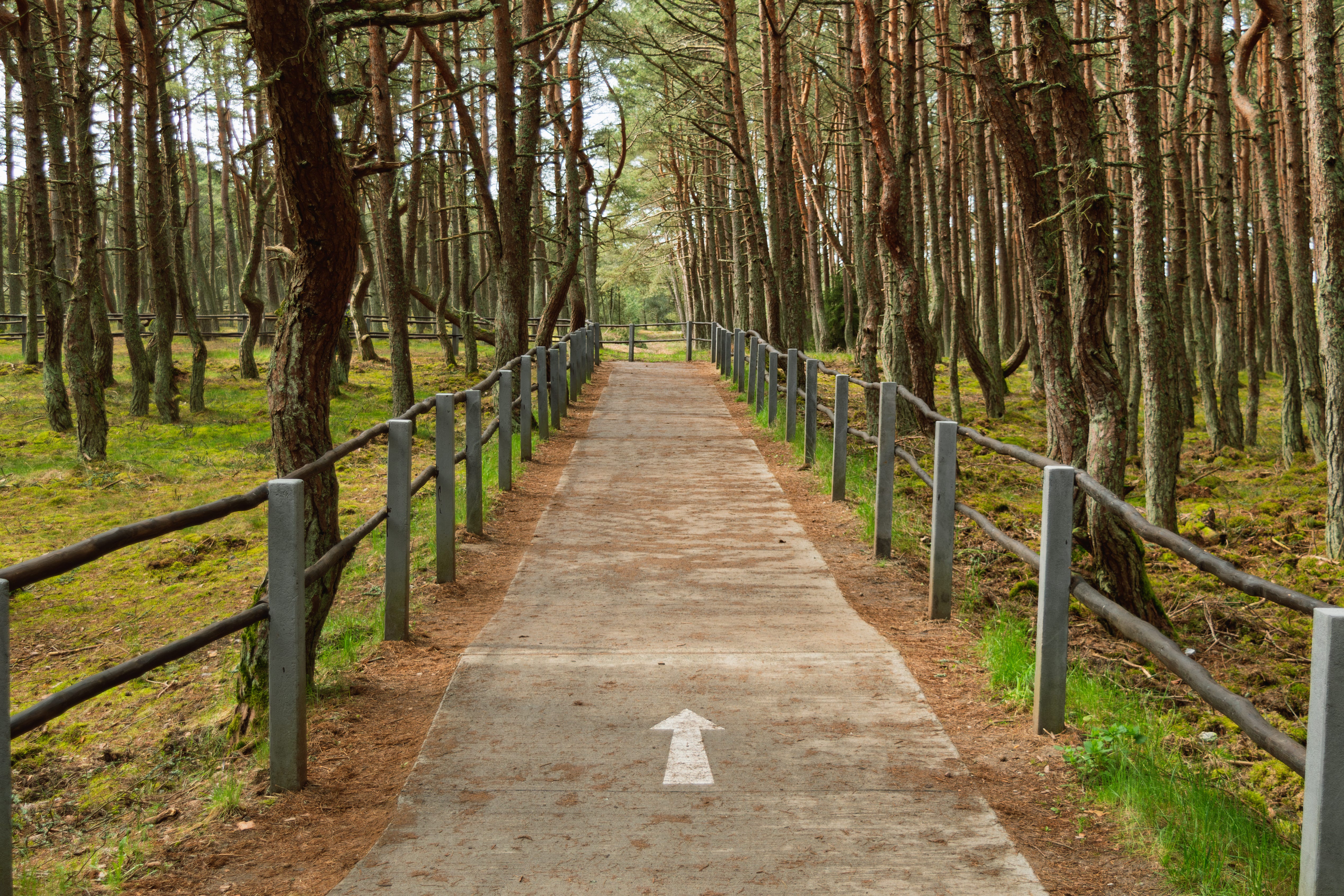
Take a moment this week to step outside without a goal. Maybe leave your phone behind or in your pocket on silent. Walk slowly and breathe deeply. Notice what draws your attention. It might be a birdcall, the movement of water, or the way the air settles against your skin.
Then ask yourself, gently and without pressure:
What part of my life is asking for something more real than convenience?
🌬️ Join Our Monthly Breathwork Session
If a part of you is asking for connection that feels real, you are welcome to join our monthly community breathwork session. It is free and open to anyone who wants a gentle space to breathe and arrive in themselves again. You can follow the link below to learn more and join the mailing list.
Keith Rowe is a breathworker, teacher, and founder of Vital Healing, a nonprofit that helps people reconnect with the wisdom of their heart through through breathwork, inner exploration, and walking meditation.
He is co-creator of the upcoming Walking Pilgrim app, a 33-day journey of mindful walking and presence. Sign up to receive updates for when it is released at walkingpilgrim.com.