

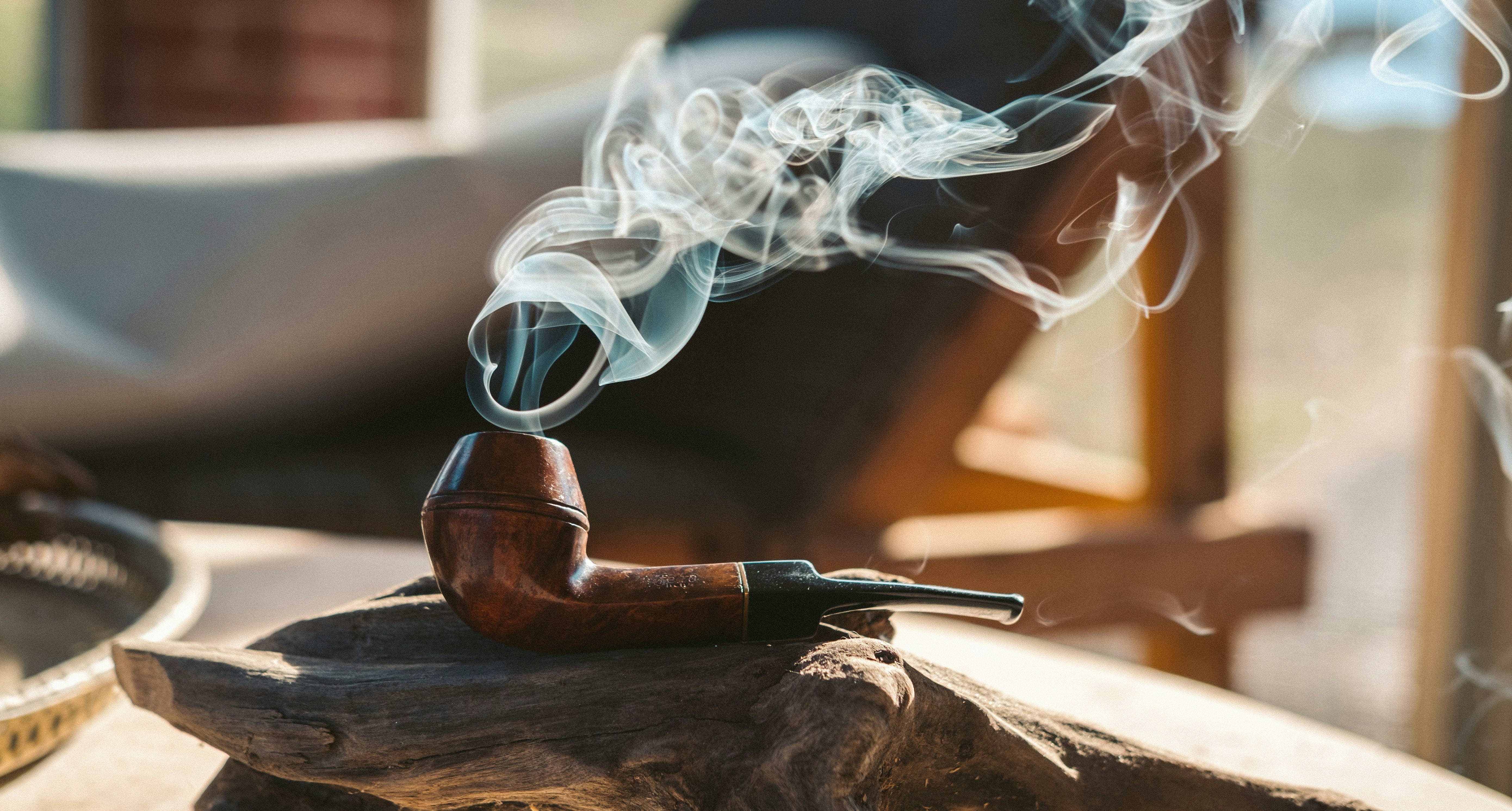
The other day, while moving some furniture, I found an old tobacco pipe I hadn’t smoked in years. On a whim I ordered some aromatic tobacco, and when it arrived I sat down with it.
The ritual of packing the bowl, striking the Zippo, and breathing in the aroma hanging in the air brought back a flood of memories. There was joy in it, and a deep wash of nostalgia. It was a reminder that rewilding begins here, in the small acts that awaken the senses and let the world speak to us again.
Shifting How We See Nature
As I smoked the pipe, I started thinking about the way I used to approach the land. For years I treated it like something that had to be kept under control. I tilled, cut, sprayed, and managed. Always trying to force it into order.
Thankfully that has started to change. I have learned to allow more and to let the cycles of nature unfold without so much interference. The more I loosened my grip, the more I began to see the beauty of the patterns all around me.
That shift has been one of my greatest teachers. The land does not need my domination. It needs my attention, my respect, and sometimes for me to step back and let it breathe. This new perspective has deepened my sense that to live well is not to fight against nature but to rejoin it and live at its pace.
When I slow down I can see myself as one among many creatures sharing the same home.
Slowly is holy.
The Call to Rewild
I have been reading two authors on rewilding, Micah Mortali in Rewilding and George Monbiot in Feral. Both speak to the call to return, though in different ways.
Mortali’s work touched me on the personal level. His practices reminded me that presence doesn’t require anything complicated. A slow walk, a moment of stillness outdoors, or simply paying attention to our senses is enough. Reading him helped me notice how much I already have around me here. The small rituals of walking the land, listening, and letting the natural world bring me back to myself.
Monbiot opened me up in a different way. His vision of restoring the land and ecosystems helped me see the deep link between our healing and the Earth’s healing. When the creek and woods are left to breathe, then I can breathe more freely too.
Next Steps
Rewilding is both a personal practice and a collective work. It touches the inner life while also shaping the world we share.
This does not mean turning our backs on modern life.
A phone, like a plow, a pipe, or a pocketknife, is just another tool. What matters is the heart that holds it.
If you walk with your phone in your pocket, let it stay there a while as you notice the light, the air, and the movements around you.
If you feel like taking a photo or video, do it with intention. Let yourself be present with the moment before and after the camera clicks.
If you are listening to music or a podcast, pause now and then to notice the sky, the wind, and the insects working around you.
For me, rewilding is less about what I carry with me and more about how I show up. It is the difference between rushing past the world and letting it touch me. Sometimes it takes nothing more than an old pipe, a slow breath, and a quiet moment to remember.
Keith Rowe is a breathworker, teacher, and founder of Vital Healing, a nonprofit that helps people reconnect with the wisdom of their heart through breathwork, somatic practice, and walking meditation.
He is co-creator of the upcoming Walking Pilgrim app, a 33-day journey of mindful walking and presence. Sign up to receive updates for when it is released at walkingpilgrim.com.